Friday, November 28, 2025

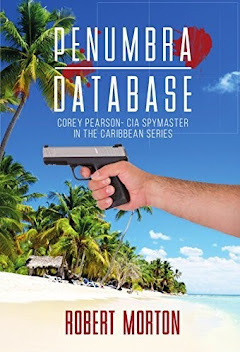
Welcome to the COREY PEARSON- CIA SPYMASTER SERIES!

     Whether you’re looking for a quick, thrilling short-story read or an immersive spy novel to sink into, Corey Pearson’s world has something for every adventure lover. Buckle up, explore the world of espionage, and join Corey Pearson on his next mission today!   

🠟


COREY PEARSON- CIA SPYMASTER NOVEL SERIESEnter the deadly world of Corey Pearson – CIA Spymaster, where deception is survival and the enemy hides in plain sight in these full-length novels. In Mission of Vengeance, Pearson hunts Russian agents behind a Caribbean massacre. In Shadow War, he uncovers a sleeper cell plot threatening millions on U.S. soil. From covert ops to nuclear threats, these gripping thrillers fuse real spycraft with breakneck action. The line between ally and traitor blurs—and only Pearson’s team can stop the chaos before it’s too late.


COREY PEARSON- CIA SPYMASTER SHORT STORY SERIESThese quick, 20-30 minute reads are perfect for spy thriller enthusiasts who crave high-stakes missions packed with real-world espionage and gripping spycraft. Read them in any order and get whisked away into Corey Pearson’s daring adventures, all in a single sitting!

Where the CIA Really Stores Its Top-Secret Files: A Look Into America’s Most Mysterious Vaults


Inside the CIA's Hidden Archives: The Shadowy World Behind the Vault

      People love to picture CIA secrets locked in some underground room with a giant vault door and a blinking red light. Turns out, that is not too far off. The Agency stays quiet about how it protects the heavy stuff, which only adds to the mystery. What we do know is enough to make you picture a place where curiosity goes to die and questions are treated like contraband.

     The obvious starting point is CIA Headquarters in Langley, Virginia. Everyone knows the famous seal in the lobby. What most people never see are the areas behind it, sitting behind layers of ID checks, guards, cameras, and long hallways meant to make outsiders lose their sense of direction. Deep inside that maze sit the Agency’s main storage areas for classified files. Not the casual stuff, but the kind of material that makes even seasoned officers lower their voices.

     If you have ever seen the movie RED, you probably remember Ernest Borgnine as the older gentleman who runs the CIA archives like a watchful gatekeeper. He knows every secret tucked into every drawer and carries it all with a calm smile. The CIA would never confirm anything like that, but the idea sticks because it captures the vibe of those hidden rooms, the sense that someone deep inside knows more than they will ever say.

     The real CIA archives hold everything from boxed paper files to locked safes to tightly controlled server rooms. Think windowless spaces, cold lighting, and the feeling that every wall is listening. Only a fraction of CIA personnel ever walk into these zones, and even they only see small slices of what is stored there.

     The vault is not limited to Langley. The CIA relies on a web of secure sites called SCIFs, short for Sensitive Compartmented Information Facilities. A SCIF is an information bunker. No phones. No outside signals. Thick walls. Even the wiring has rules. If a SCIF could talk, it would probably sound irritated from years of keeping secrets inside and trouble outside.

     Inside these spaces, classified information lives two parallel lives. One is analog. Paper files sit inside safes with combo locks, alarms, access logs, and stacked layers of clearance. The second is digital. The servers that hold top secret material never touch the public internet. They run on sealed networks with encryption, multi-step authentication, and constant monitoring. Even inside the CIA, someone with Top Secret clearance might still be barred from half the material in the same building.

     A lot of the protection is cultural. People train to guard information as tightly as the hardware does. You do not talk in the wrong place. You do not ask for details you do not need. The mindset becomes part of the lock.

     Now, if you have read the spy thriller Shadow War, you already got a taste of how intense this world can feel. There is a moment when Corey Pearson, the CIA spymaster at the center of the story, asks General Morrison for permission to dig into the Agency’s archives. He wants to uncover what really happened to Duane VanHouten, the older mentor who guided him early in his career and was later murdered by Russian intelligence in Kuwait. Those memories keep clawing at him.

     Even in fiction, access is treated like stepping into a place that can change a person. Morrison warns him that the Archives hold truths powerful people want buried. The real CIA treats its archives with that same weight, even if the details stay hidden.

     And that is the point. No one outside the inner circle knows the full picture of where the most sensitive files sit or how deep the rabbit hole goes. Maybe a handful of people have walked through the most restricted rooms. Maybe the most dangerous material is spread out so no single breach could topple it all. The secrecy is intentional. It protects the work, the people, and sometimes the country.

     Wherever the CIA hides its most guarded files, those places are built to keep the truth quiet, the curious at bay, and the shadows right where the Agency wants them.


Robert Morton is a member of the Association of Former Intelligence Officers (AFIO) and writes about the U.S. Intelligence Community (IC). He also writes the Corey Pearson- CIA Spymaster Series, which blends his knowledge of real-life intelligence operations with gripping fictional storytelling. His thrillers reveal the shadowy world of covert missions and betrayal with striking realism.

Monday, November 24, 2025

SpyWatch: How Russia Targets America’s Stealth Aircraft Technology


America's Next-Gen Aircraft Are Prime Targets for Russian Intelligence

     When I look at how America’s high-tech aircraft have evolved, it feels like I’m watching the future trying to break its way into the present. Take the X-44 MANTA. It never got past the concept stage, but it showed just how far our engineers were willing to push stealth. No tail, no extra drag, just a sharp, clean triangle built to cut through the sky while staying off the radar’s map.

     It was the kind of idea that arrives too early for its own good, then gets buried, then resurfaces decades later when people realize it wasn’t crazy at all. Now the Air Force is chasing the Next Generation Air Dominance fighter, and you can practically see the MANTA’s ghost floating around in those early renderings. It’s funny how ideas don’t really die. They just wait for technology to catch up.

     And that’s exactly why foreign intel services latch onto these programs. When something like the MANTA shows up, even just as a concept, it hints at where American aerospace is headed. That kind of progress means power, and power always draws thieves. Russia’s been playing this game since the Cold War, and their playbook hasn’t changed much. They send in businessmen, engineers, folks on short-term visas, so-called consultants, and every kind of go-between you can think of to grab our aviation tech before it ever leaves the ground.

     A few years back, a Russian official named Alexander Korshunov got grabbed by authorities for trying to snag jet engine composite tech from an American company. He wasn’t hacking from some basement either. He was working through insiders and industry contacts, trying to quietly walk off with years of U.S. research.

     The whole thing showed how these operations actually look in real life: slow, patient, and hidden behind handshakes and business deals. That case was a good reminder that the hunt for our secrets never really stops. It just shifts targets depending on what’s new and valuable.

     I think about that when I work on my own writing, especially The Hunt For A Russian Spy. In that story, Corey Pearson goes undercover in one of Boeing’s most secretive facilities to catch a mole before they walk out with the plans for a hypersonic spy plane. And even though it’s fiction, I wrote it with real world cases in mind. Corey pretends to be a janitor, sets up hidden surveillance, lays digital traps, all while blending into the background like another tired face punching a time clock.

     The scary part is that real moles use the same camouflage. They hide in the ordinary. They rely on the assumption that people stop paying attention after a while. That’s how leaks happen. That’s how technology slips away.

     Watching a video about MANTA pulled my mind right back to Corey’s mission. Whether it’s a spy plane in a story or some wild stealth concept from the 90s, our edge has always come from pushing past the comfortable stuff. If we let those ideas slip away or let someone else twist them into their own weapons, we lose the air advantage we’ve spent generations building.

     The implications for national security are simple and blunt. We cannot afford to let our most advanced aviation concepts leak into the hands of foreign intelligence. The value isn’t just in the hardware. It’s in the years of research, the failures, the breakthroughs, the quiet trial-and-error that no adversary should ever get for free. Protecting that isn’t paranoia. It’s survival.


Robert Morton is a member of the Association of Former Intelligence Officers (AFIO) and writes about the U.S. Intelligence Community (IC). He writes the Corey Pearson- CIA Spymaster Short Story Series, which blends his knowledge of real-life intelligence operations with gripping fictional storytelling. Each short story can be read in one sitting, for those on the go! His thrillers reveal the shadowy world of covert missions and betrayal with striking realism.


Sunday, November 23, 2025

Inside the Controversy: Why Trump Backed MBS Despite U.S. Intelligence Findings

Trumps Defense of MBS: What It Reveals About U.S. Intelligence and Power Politics

I read about President Trump’s meeting with the Saudi crown prince, and what stood out to me was the sharp gap between what Donald Trump said in public and what U.S. intelligence had already concluded about the murder of Jamal Khashoggi. In the Oval Office, he backed Mohammed bin Salman and said the crown prince knew nothing about the killing. But the intelligence assessment made it clear that MBS approved an operation to capture or kill Khashoggi, based on his tight command over Saudi security services and the involvement of his trusted protective unit.

     To me, the logic behind that assessment is straightforward. MBS runs the security state with a firm grip, signs off on major actions, and keeps close control of the people who would have been involved. It is hard to imagine such a sensitive and risky mission happening without his say-so. That view isn’t fringe either. It has been broadly accepted by regional experts and policy analysts, even though Saudi Arabia disputes it.

     What strikes me most is not just the disagreement between Trump and the intelligence community, but the way the moment played out. The president publicly sided with the crown prince while leaving the intelligence findings unacknowledged, which sent a signal far beyond that room. It suggested that political alignment or personal rapport could outweigh formal assessments and the gravity of a journalist’s killing.

     It reminded me a bit of my spy thriller novel Mission of Vengeance, where CIA spymaster Corey Pearson is guided by a president who refuses to back U.S. intelligence policies that prop up dictators and tyrannical regimes, which makes the contrast in real life all the more striking.

     When I think about this from a national security angle, the implications feel pretty direct. If the United States signals that certain partners can cross major lines without consequence, it weakens the country’s credibility when trying to deter similar behavior from rivals. It also muddies the values it claims to defend. Allies start to wonder what the standards really are, and adversaries take note when power seems to carry impunity.

     For America, strong security doesn’t come only from military strength or strategic ties. It also comes from the consistency of its principles and the reliability of its word. When the United States speaks clearly, acts consistently, and backs its intelligence, it can rally allies and set boundaries that others respect. When those signals get mixed, the country loses leverage. In a world already tilting toward more aggressive state behavior, that loss has a way of coming back to bite.


Robert Morton is a member of the Association of Former Intelligence Officers (AFIO) and writes about the U.S. Intelligence Community (IC). He also writes the full-length Corey Pearson- CIA Spymaster Series, which blends his knowledge of real-life intelligence operations with gripping fictional storytelling. His thrillers reveal the shadowy world of covert missions and betrayal with striking realism.

SpyWatch: CIA Drops Top Spy Leader Pick: Politics and U.S. National Security Concerns


Ralph Goff was a seasoned spymaster and dropping him raises national security questions

The decision by the CIA to drop a seasoned agency veteran, Ralph Goff, from consideration for the top clandestine operations post sends a clear signal—there’s more going on behind the scenes than meets the eye. After 35 years of service, six station chief tours and a stint as chief of operations for entire swaths of Europe and Eurasia, Goff seemed practically built for the job. Yet, despite having a confirmed start date, the appointment was abruptly reversed with no public explanation.

     What makes the reversal really interesting is the speculation around Goff’s outspoken support for Ukraine. In the era where foreign policy is increasingly entwined with intelligence-community leadership, his advocacy appears to have been a factor. After retirement he didn’t fade into the background—he traveled to Ukraine, met with officials, supported humanitarian efforts—and that kind of public posture in an intelligence veteran is both rare and risky. It raises the question: when operational experience meets outspoken foreign-policy views, does that make someone indispensable—or too politically exposed for the job?

     The optics are stark. An agency that deals in secrets moves openly to sideline someone who has been at the cutting edge of human intelligence, presumably because of external pressures or internal politics. It suggests that the selection for senior intelligence roles isn’t just about operational acumen—it’s increasingly about alignment with broader strategic narratives and political comfort. For those in the trenches of clandestine operations, that’s a chilling message: even the most decorated case-officer isn’t immune from being sidelined if his views, even after agency retirement, fall outside acceptable bounds.

     From a national-security standpoint the implications are serious. Intelligence work isn’t just about what you know—it’s who you trust, how you deploy that knowledge, and whether you have the freedom to act without political interference. If capable leaders like Goff are being passed over because their post-service public statements or affiliations don’t fit the current strategic tone, the agency risks losing not just talent but authenticity. Opponents—state and non-state—thrive when U.S. intelligence looks uncertain or compromised.

     In plain terms: when the people running clandestine operations are themselves under the microscope for their views, the risk grows that the real work gets second-guessed, delayed or altered. That feeds directly into adversary hands. A weaker or more politicized intelligence community is less credible, less nimble, and less fearsome. And in a world where adversaries are actively probing, infiltrating and influencing, we can’t afford either.


Robert Morton is a member of the Association of Former Intelligence Officers (AFIO) and writes about the U.S. Intelligence Community (IC). He also writes the full-length Corey Pearson- CIA Spymaster Series, which blends his knowledge of real-life intelligence operations with gripping fictional storytelling. His thrillers reveal the shadowy world of covert missions and betrayal with striking realism.

Thursday, November 20, 2025

Engineered Viruses and Urban Targets: The Chilling Link Between Real Bioterror Plots and Today’s Top Spy Thrillers


Bioterrorism in Fiction and Reality- Today's Spy Plots Feel Frighteningly Possible

The threat of bioterrorism has always felt like something out of a late-night thriller, the kind of danger that lives in the shadows and only jumps into the light when someone connects the right dots. Yet the uncomfortable truth is that the United States has already brushed up against real attempts to use biological weapons, and those moments are far closer to the tone of a spy novel than most people realize.

     When I look at real bioterror cases and then compare them to the stories told in Richard Preston’s The Cobra Event and my own spy thriller Shadow War, I’m struck by how thin the line between fiction and reality really is. The similarities in plot are so strong that they make the whole subject feel uncomfortably real.

     Take the 1984 Rajneeshee bioterror attack in Oregon, where followers of a cult leader deliberately contaminated salad bars with salmonella in an attempt to sway a local election. It sounds absurd until you remember that 751 people got violently sick. Or the anthrax letters in 2001, when envelopes packed with deadly spores shut down government buildings and killed five people. These weren’t movie scripts. They were real operations carried out on American soil, proving that it doesn’t take a massive army or a Hollywood supervillain to turn biology into a weapon. Sometimes all it takes is one determined person with a twisted idea and a scientific skill set.

     That unsettling overlap between possibility and imagination is exactly what gives The Cobra Event its punch. Preston opens with a New York City teenager who wakes up feeling a little off and spirals into a horrifying death only hours later. The seizures, the hemorrhaging, the bizarre urge to self-mutilate, all of it pointing to an engineered pathogen designed for terror instead of treatment.

     As more cases appear, the CDC scrambles, the federal government panics, and New York becomes the stage for a crisis that feels like it could spill into the real world at any moment. Preston famously did his homework, digging through classified histories, interviewing intelligence officers, and talking to scientists who handled the darkest corners of biological research. The fictional virus is fake, but the scaffolding holding that story up is painfully real.

     My own thriller Shadow War spy thriller hits similar nerves, though it comes at the threat from a spy-driven angle. CIA operative Corey Pearson digs into what looks like a Russian sleeper cell operation, only to find that the weapon in play might not be the expected suitcase nuke but a virus engineered to create mass chaos. New York is once again the bullseye, and Pearson is stuck dealing with enemies, both foreign and homegrown.

     The deeper Pearson gets, the more he realizes the rot isn’t just outside America’s borders. Some of it is buried inside the very institutions meant to keep the country safe. That tension between internal betrayal and external danger is what gives thriller Shadow War its bite. You’re watching a bioterror threat unfold, but you’re also watching the machinery of national security creak under pressure.

     Both novels share an eerie connection to real-world vulnerabilities. Engineered viruses are no longer science fiction. Scientists can build or modify pathogens with precision, and while most of that work is done responsibly, the same technology can be hijacked or corrupted. Intelligence analysts have warned for years that nonstate actors might someday acquire the tools to modify viruses cheaply and covertly. Add geopolitical tension, insider threats, and the anonymity that biology allows, and the idea of a catastrophic strike on a major city stops feeling like far-fetched entertainment.

     That’s what makes these thrillers more than good stories. They tap into the underlying fear that modern threats don’t always announce themselves with explosions or gunfire. Sometimes they spread quietly, invisibly, through the air or a touch or a shared surface. The danger grows before anyone realizes what is happening.

     Whether Preston is showing how fast an engineered virus can tear through New York or me throwing CIA operative Corey Pearson into a maze of hidden agendas and weaponized science, both stories point to the same unsettling truth: bioterrorism is not theoretical. It is real, it is advancing, and it is far closer to breaking into our world than most people want to believe.


Robert Morton is a member of the Association of Former Intelligence Officers (AFIO) and writes about the U.S. Intelligence Community (IC). He also writes the full-length Corey Pearson- CIA Spymaster Series, which blends his knowledge of real-life intelligence operations with gripping fictional storytelling. His thrillers reveal the shadowy world of covert missions and betrayal with striking realism.

Thursday, November 13, 2025

The Real and Fictional Missions to Save Americans in Colombia: Silent Heroes Tells the Story


U.S. Special Forces Rescue American Hostages From Colombian Jungle

     In the thick, tangled jungle of Colombia, rescue missions aren’t about charging in with guns blazing. They're about patience, precision, and intelligence—sometimes quite literally. Over the past few decades, Colombia has been a hotspot for hostage situations, especially when American lives are involved. Guerrilla groups like FARC, once responsible for much of the country’s internal conflict, used kidnapping as both a political and economic weapon. And when Americans got caught in the crosshairs, the stakes jumped instantly.

     The most iconic case in recent memory was Operation Jaque in 2008. Three American contractors—Marc Gonsalves, Thomas Howes, and Keith Stansell—had been held hostage by FARC for over five years after their surveillance plane crashed in rebel territory. The Colombian military pulled off a brilliant deception: commandos infiltrated FARC posing as humanitarian workers and convinced the rebels to load the hostages into a helicopter. No shots fired. Everyone made it out alive.

     Behind the scenes, the U.S. had skin in the game. Intelligence agencies and military advisers played supporting roles—sharing satellite intel, advising strategy, and helping Colombia sharpen its counterinsurgency capabilities. But publicly, the rescue was credited to Colombia alone. That’s the thing about special operations and intelligence missions: the real stuff often never makes the news. It’s shadow work.

     That blurred line between real-life black ops and cinematic spycraft is exactly what Silent Heroes leans into. In the novel, six Americans—doctors, teachers, aid workers—are snatched by FARC deep in the jungle. The CIA sends in Corey Pearson and his covert team, experts at disappearing into hostile environments. They use encrypted satellite feeds, human assets, cultural immersion, and carefully crafted legends (false identities) to locate and rescue the hostages. Pearson doesn’t just lead an op—he vanishes into the terrain and culture, becoming invisible while the mission takes shape around him.

     That might sound like fiction—and it is—but it’s grounded in the same tactics that real-world operations depend on. The jungle is a beast. Dense foliage swallows sound. Heat and humidity sap energy. Communication is patchy. And FARC fighters don’t wear uniforms; they blend in too. That’s why any successful rescue takes more than brute strength—it takes deep-cover operatives who know how to think, adapt, and survive.

     And although we haven’t seen a public case recently where U.S. special forces stormed through Colombia to free hostages, it’s not far-fetched. We’ve seen similar daring missions in other parts of the world—Somalia, Iraq, Afghanistan—where U.S. operatives have rescued hostages under extreme conditions. It's not hard to imagine that operations like those have played out quietly in the Colombian rainforest, without press releases or fanfare. No medals. Just success.

     Silent Heroes taps into that possibility, showing us what it might look like if the U.S. did send a black-ops team into the Colombian jungle. Corey Pearson’s crew doesn’t just parachute in with guns—they embed themselves in the culture, blending with locals, tapping into human networks, slowly tightening the net around the hostage site. The jungle becomes a chessboard, every move calculated, every choice risky.

     It’s the kind of operation that, in real life, probably has happened—we just haven’t heard about it. Because when Americans are taken hostage, especially in hostile foreign territory, there are people trained to go in, quietly, and bring them home.

     The world’s most dangerous places don’t scare them. They specialize in becoming ghosts. And whether it’s a real mission like Operation Jaque or a fictional one in Silent Heroes, the goal is always the same: get our people out—fast, quiet, and alive.


Robert Morton is a member of the Association of Former Intelligence Officers (AFIO) and writes about the U.S. Intelligence Community (IC). He also writes the full-length Corey Pearson- CIA Spymaster Series, which blends his knowledge of real-life intelligence operations with gripping fictional storytelling. His thrillers reveal the shadowy world of covert missions and betrayal with striking realism.